
Running My Local Models After GLM 5.2 Changed the Economics
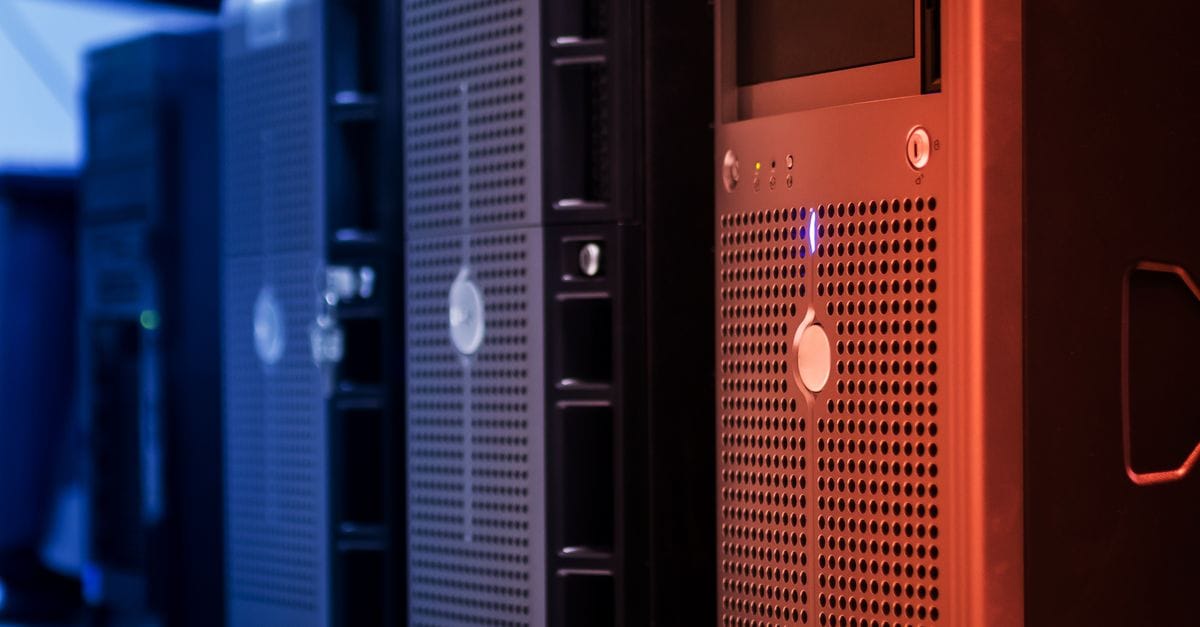
The moment GLM 5.2 hit 2626 tokens/second at half the cost of Blackwell, I knew my API bills were about to become a thing of the past. Three months later, I'm sitting here with spreadsheets full of power consumption data, depreciation calculations, and a completely transformed development workflow.
The Performance Numbers That Started Everything
I'd been tracking local inference performance for months, but GLM 5.2's benchmark broke something in my mental model. 2626 tokens per second on consumer hardware wasn't just fast—it was faster than my typing speed, faster than I could read the output. The cost per token calculations I'd been doing suddenly looked obsolete.
My OpenAI bills had been running $340-480 monthly, mostly from prototyping sessions where I'd burn through context windows testing ideas. The math on local inference never quite worked until this benchmark landed. When I ran the numbers on a 4090 setup pulling 350W under load, even factoring in hardware depreciation over two years, I was looking at roughly $0.12 per hour of compute time.
The 2626 tok/s number mattered specifically because it crossed my "real-time conversation" threshold. Most of my API usage involved back-and-forth iteration—refining prompts, exploring variations, debugging model behavior. Below 1000 tok/s, there's still that pause where I'm waiting. Above 2500, the bottleneck shifts entirely to my own reading speed.
The Real Cost Accounting
I went with a 4090 build: $1,599 for the GPU, another $1,200 for the rest of the system. Total hardware investment of $2,799, which I'm depreciating over 24 months at $116.6 monthly.
Power consumption has been more predictable than I expected. Under sustained inference load, the system pulls 410W. During my typical usage pattern—maybe 4-6 hours of active development daily—I'm averaging 47 kWh monthly. At my local rate of $0.14/kWh, that's $6.58 in electricity.
So my monthly local inference cost breaks down to:
- Hardware depreciation: $116.60
- Power consumption: $6.58
- Total: $123.18
What I didn't anticipate was the cooling situation. Running inference workloads heats up my office enough that I needed better ventilation. The fan I added pulls another 40W when running, adding maybe $3 monthly to power costs. More significantly, I underestimated setup and maintenance time—probably 8-10 hours across the first month getting everything stable.
Compared to my previous $340-480 API bills, I'm saving $217-357 monthly after covering all local costs.
What Changed in My Development Workflow
The near-zero latency unlocked application patterns I hadn't seriously considered before. I built a real-time code reviewer that processes every keystroke—something that would be expensive via API. The marginal cost being essentially zero electricity makes these "wasteful" usage patterns viable.
I started treating the model like a persistent development environment rather than a service I call occasionally. Instead of batching prompts to minimize API calls, I now have continuous inference streams running during development sessions. The model becomes ambient intelligence rather than a tool I deliberately invoke.
One specific example: I'm now running semantic search across my entire codebase on every file save, with the model generating contextual suggestions. The API cost for this would be substantial—maybe $20-30 per day of active development. Locally, it's just electricity.
The shift from "API call" thinking to "always-on inference" thinking changed what felt possible. When each token costs fractions of a penny instead of multiple pennies, suddenly conversational interfaces, real-time analysis, and exploratory prompting all become default rather than carefully rationed activities.
The Unexpected Discoveries
Owning the inference stack changed my relationship with the models in ways I didn't predict. When I hit rate limits or have latency spikes with APIs, there's nothing to debug—I just wait or pay more. With local inference, performance becomes something I can actually investigate and optimize.
I found myself customizing inference parameters much more aggressively. Temperature, top-p, repetition penalty—when experimentation doesn't cost API credits, I actually tune these settings for specific use cases rather than sticking with defaults.
The privacy implications became relevant in ways I hadn't considered. I'm now comfortable feeding the model my entire git history, personal notes, financial spreadsheets—data I'd never send to an external API. This expanded the scope of viable applications significantly.
Local inference also revealed performance characteristics that don't show up in benchmarks. The model's behavior during the first few tokens of generation is different from steady-state generation. With APIs, this is invisible. Locally, I can see how inference quality changes across different prompt lengths and generation stages.
Current State: Three Months In
My actual monthly costs have stabilized around $125, pretty much exactly what I calculated. The $217-357 monthly savings are real, though I'm spending more on experimentation since the marginal cost dropped so low.
I was wrong about hardware reliability—I expected more maintenance overhead, but the system has been remarkably stable. I was also wrong about model variety. I thought I'd miss having easy access to GPT-4, Claude, etc., but GLM 5.2 covers most of my use cases well enough that switching costs aren't worth it.
The types of projects I'm building now skew heavily toward real-time and high-volume inference patterns. A documentation system that re-indexes on every commit. A writing assistant that provides sentence-by-sentence feedback as I type. Applications where the AI component feels less like a discrete service and more like part of the development environment.
APIs still make sense for me when I need very specific model capabilities—vision, function calling, or cutting-edge reasoning that GLM 5.2 doesn't match. But those account for maybe 10% of my usage now.
The shift to local isn't just about cost optimization—it's about crossing into a regime where AI becomes infrastructure rather than a service. I'm curious whether this changes how we think about building AI-native applications, or if I'm just early to a transition that others will eventually make.